
Sprint 4 - Paranoia
So...Many...Placement maps!
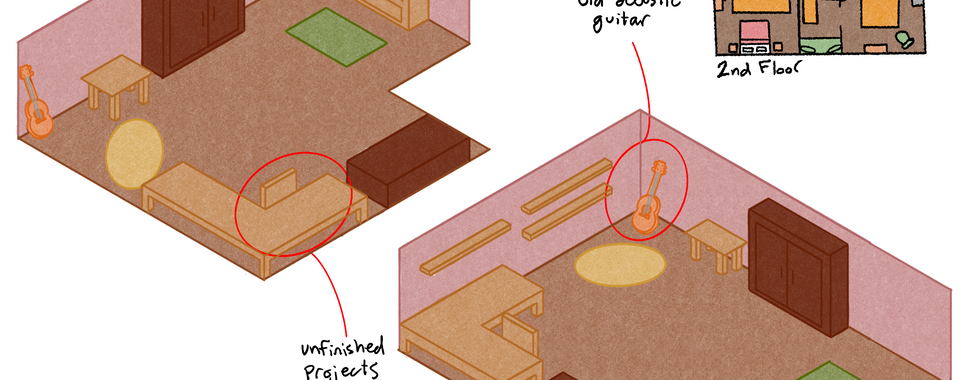
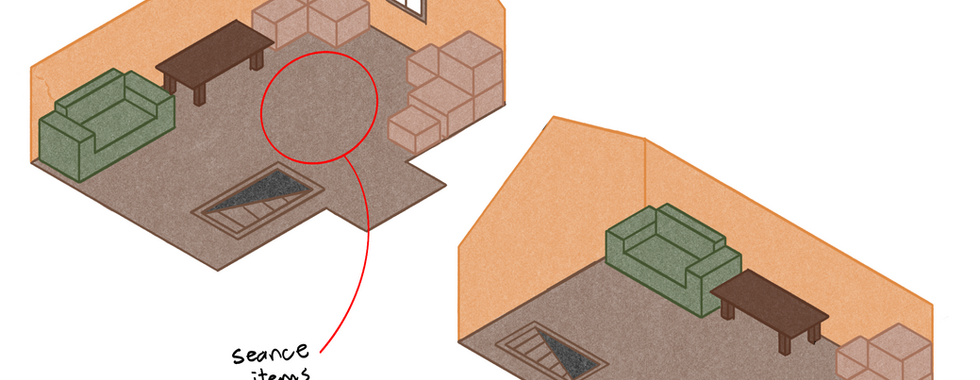
Sprint 4 for Paranoia for me was a lot of documentation and maps. The majority of this sprint I was working on the placement maps for each room of the map. These maps were designed with a few things in mind. Firstly, I wanted to make sure my team knew what items went where. The maps detail specific areas where certain items should be present in every single room. Secondly, I wanted my modelers to know roughly what each should look like and how it should be laid out and scaled. I put a lot of effort into sticking with an isometric perspective, both to keep the difficulty of the art for the maps low, and to make sure they were all consistent in scale and style. I also made sure to include where the area being mapped out was located in relation to the general house layout, making sure to include the full floor map of the house in the corner with the room highlighted. No only will these assist with the visualization of the game for the modelers and programmers, but it has also helped to keep my mind refreshed on what I want the areas to look like, since they were originally designed a year or so ago.






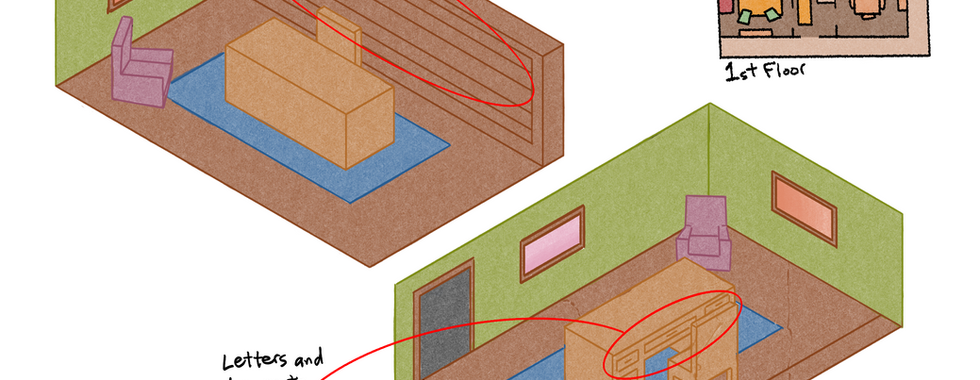


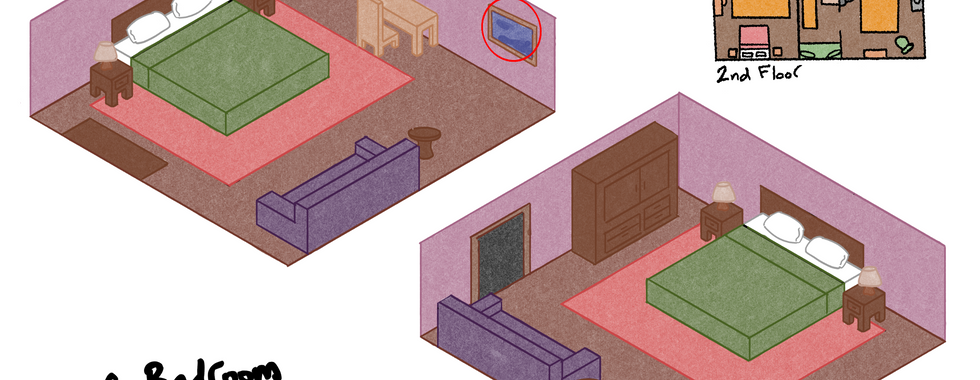


Apart from these item placement maps, I also made accompanying environmental storytelling maps that utilize the same graphics, but detail where storytelling elements should be located throughout the environment. This set of maps was much quicker to make, as I had already completed the graphics, so it allowed me to focus specifically on what I wanted to include to help the player learn about the game's world and where I wanted these items to appear.





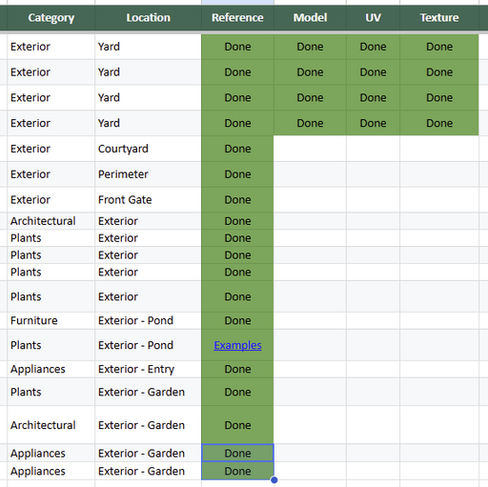
Another big aspect I completed was finding the resources for the modelers. I finally finished researching references for all of the important furniture, architectural, and exterior assets. While it's relatively simple to find references in general, I put extra effort into making sure all of them were as period accurate as possible while adhering to my visual style preferences. Some things were particularly difficult to find good references for, such as the basement bulkhead doors and attic hatch. Luckily, vintage furniture and architecture is an interest among millions of people online, so there were some very resourceful websites where I was able to find a majority of the items needed. While it was interesting to learn about the history of refrigerators, at least to me, it did get quite monotonous toward the end and I'm glad to be done with that task.



The last major task I completed was preparing all of the necessary UI assets for one of our programmers to implement into the existing UI structure. This was relatively simple, since I had already created wireframes with most of the detail I want the final menu's to have. Since we're still in the prototyping phase, I opted to use these assets and not put unnecessary effort into making perfect UI assets just yet. Since they already have a good amount of detail as is, I decided it would be more important to get them implemented and focus on other areas that need to be more fleshed out.

One last thing I would like to talk about is that my team has been having some difficulty with communication between the programmers and the rest of the team. My producer and I have worked to try to keep communication consistent and frequent, but we still have concerns about workloads being low for some members and it's a bit of a stress point for us. We're committed to remaining as on top of it as possible, though, and we'll do whatever is necessary to correct the situation as much as we can going forward.
Overall, I'm generally positive about the state of the game going forward, as we have an eager group of artists working hard to complete models and assets, and some very good programmers implementing core mechanics slowly but surely.