
Sprint 1 - Paranoia
Planning and Prototyping
My team is creating the game Paranoia. Paranoia is a mix of the psychological horror and cleaning simulation genres, meant to satisfy the desire to clean an environment, discover clues, and solve puzzles. The summarized story for the game is that the player has a dark past where a serial killer has taken their parents and sent them into witness protection for years. They are finally being released and sent to live on a run-down property where they must clean up and make it habitable. During this process, they discover clues and secrets about their parents' past that change the way they see everything.
As the designer, my first job was to help my team to understand my vision for the game. I spoke with them and shared all my pre-production documents and information to help them gain the most complete understanding possible. Once the foundation was set, I went straight to work creating UI wireframes for every menu I wanted to include in the game. I made a total of 15 wireframes, including those for the main menu, in-game HUDs, interaction prompts, inspection menu, and more.


I used placeholder artwork to accurately convey the atmosphere I wanted for the main menu, and designed all the buttons and other elements by hand. Using the game UI database was very helpful as well; it inspired me to change the in-game menu design from a simple square with tabs to a journal, with each section as a bookmark. I want the player to be immersed in the game world, and I feel that customizing visual elements like this can make a huge difference and make the entire package feel more handcrafted and special.
While I worked on those, my lead 3D artist created a blockout of the prototype's map, which consists of the house's first level. We discussed back and forth throughout the process to ensure that it aligned with what I wanted, and he injected some of his own ideas into it to further polish the idea. Once the rough layout was in place, I helped with a couple of difficult aspects, like the roof and figuring out where we wanted the basement hatch to go.

We then began working on the important items and furniture that would need to have a bit more detail for the prototype experience. First, I set to work finding lots of references for each item we needed, making sure that they would match in style and would be from an accurate time period. This is also extremely useful for modelling itself, as you can have the references right there with you to ensure your model is made accurately.


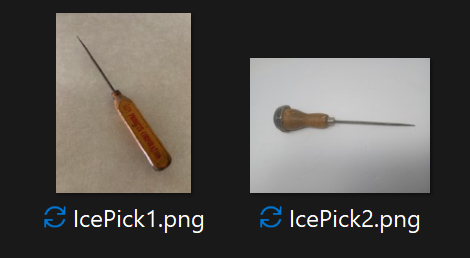
We then split up each category in half so that we each had equal work. I took on creating the models and UVs for the cabinet key, the puzzle pieces, the oven, the fridge, and the puzzle frame. I find antique architecture and technology very interesting, so this was especially fun for me to research and model.


Something I also worked on throughout this sprint, in between tasks, was creating a spreadsheet with rules and information to maintain consistent style. Our game will be visually inspired by PS1 and PS2-era graphics, so it's very useful to have an idea of poly counts and texture resolutions, among other details. We're using a program to scale down the textures and incorporate dithering effects and limited color palettes to give it a more late-90s, early 2000s aesthetic. While we're still testing and tweaking certain values for this, the foundation is there, and so far, it is going well.

This is my first time being in a group this large and feeling I have control over many aspects of the game as a designer. I'm naturally a very shy and timid person, so this experience so far has been very strange for me. I feel that it has already helped me to come out of my shell a bit and not be as afraid to give helpful criticism to others. I look forward to what this game will become.